
Why Your Website Isn’t Converting (And How to Fix It)
Getting traffic but no leads? Learn the biggest conversion mistakes businesses make—and how to fix them.
5 min read • May 2026
In This Guide
- What a low-converting website means
- Why websites fail to convert
- How high-converting websites work
- Simple fixes to improve conversions
Why Your Website Isn’t Converting Visitors
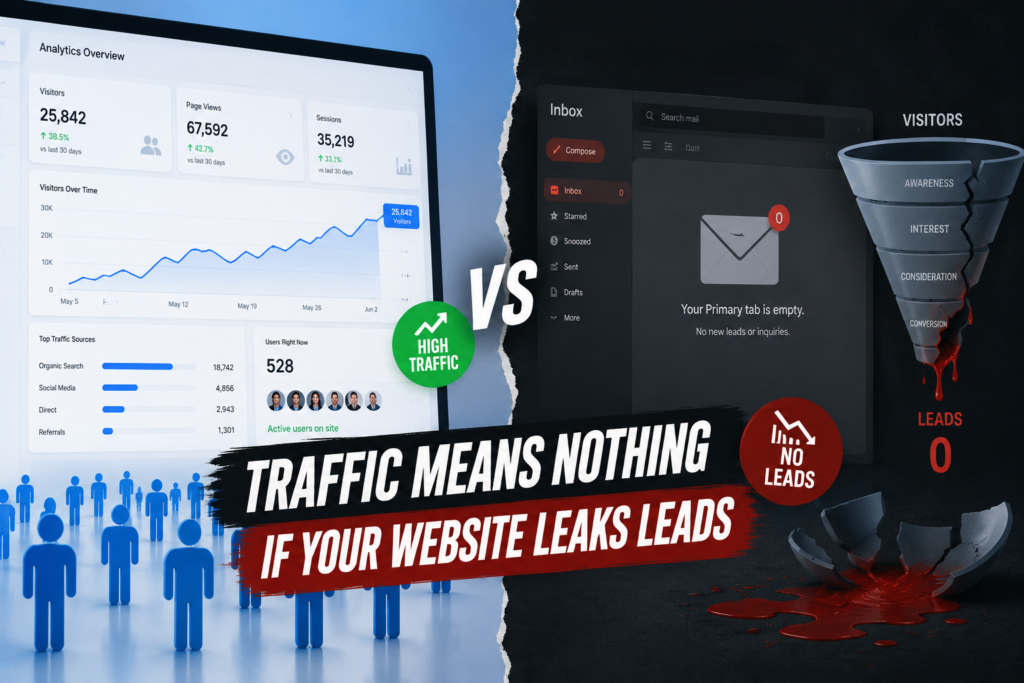
Many businesses think they have a traffic problem. But often, the real problem is conversion.
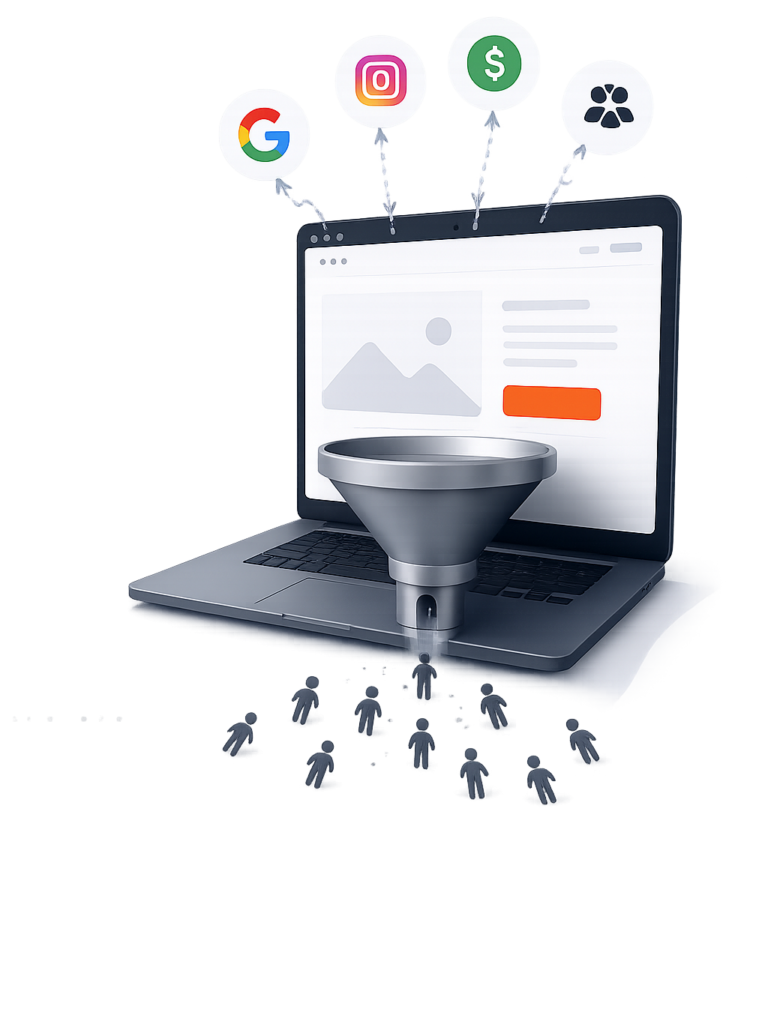
Your website may already be getting visitors from:
- social media
- ads
- referrals
Yet inquiries stay low.
No calls. No bookings. No qualified leads.
This is one of the most common growth problems businesses face in 2026. And usually, the issue is not visibility. It’s the website itself.
In this guide, you’ll learn why websites fail to convert visitors into leads—and what high-converting websites do differently.
What a Low-Converting Website Actually Means
A low-converting website attracts visitors but fails to move them toward action.
That action could be:
- Booking a call
- Submitting a form
- Requesting a quote
- Making a purchase
Many businesses celebrate website visits while ignoring the real metric that matters:
Results.
A website should function like a sales system—not just an online brochure.
“Traffic without conversion creates a false sense of progress.”
The Biggest Reasons Websites Fails to Convert
Most websites lose leads because they create confusion, friction, or distrust.
Weak Messaging
Visitors decide very quickly whether your business is relevant to them.
❌ Weak:
“We help businesses grow.”
✅ Better:
“We help home care agencies generate more qualified leads through SEO and conversion-focused websites.”
Strong messaging clearly explains:
- who you help
- what problem you solve
- why you are different
- what users should do next
Specific messaging converts better because it creates clarity.
No Clear Call-to-Action
Many websites do not guide users toward a next step.
❌ Bad CTA:
Learn More
✅ Good CTA:
Get Your Free Growth Audit
Weak CTAs reduce conversion dramatically.
Visitors should never wonder: “What am I supposed to do now?”
Your website should direct users toward one primary action:
- Get Your Free Growth Audit
- Book a Strategy Call
- Get a Custom Marketing Plan
Clear CTAs improve user action.
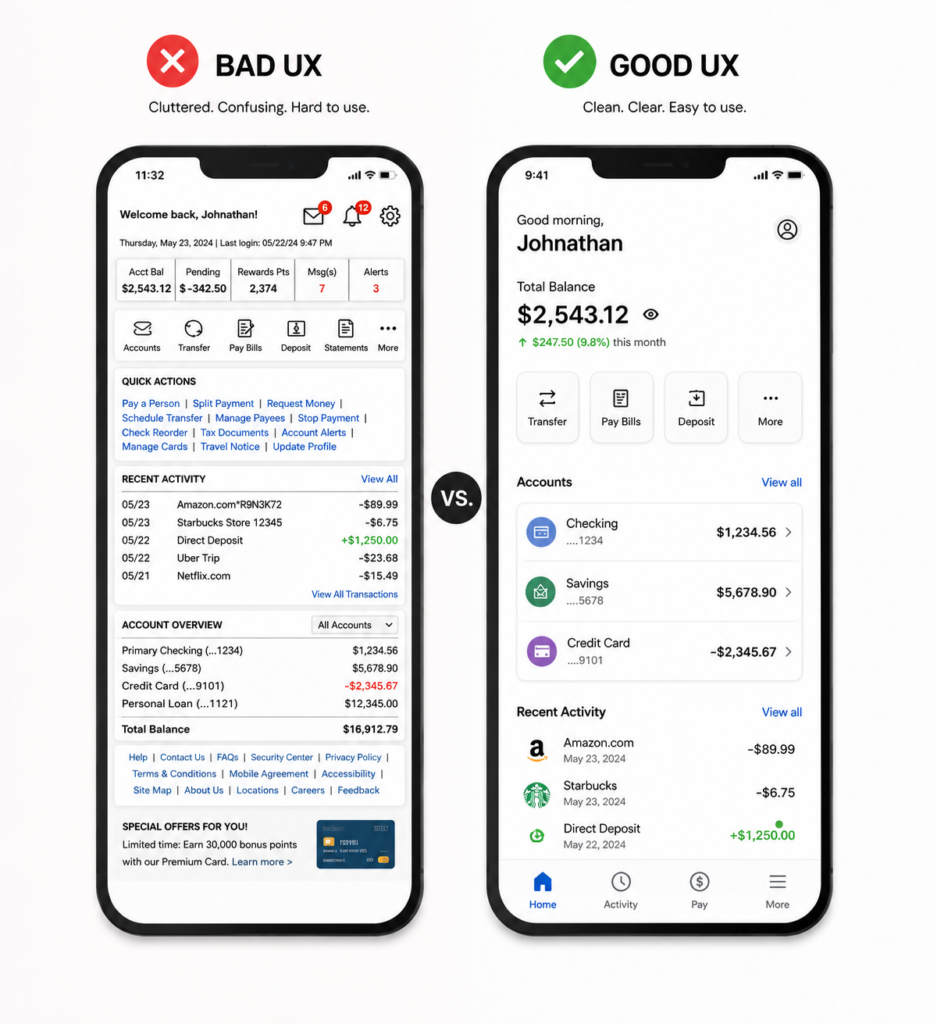
Poor Mobile Experience
Most traffic now comes from mobile devices.
Yet many websites still:
- load poorly on mobile
- have tiny text
- use cluttered layouts
- or make forms difficult to complete
A poor mobile experience increases bounce rates and lowers trust instantly.
A conversion-focused website must be:
- fast
- clean
- mobile-friendly
- easy to navigate
Slow Loading Speed
Website speed directly affects conversions.
If your website takes too long to load:
- visitors leave
- trust decreases
- SEO rankings suffer
Even a one-second delay can impact conversion rates.
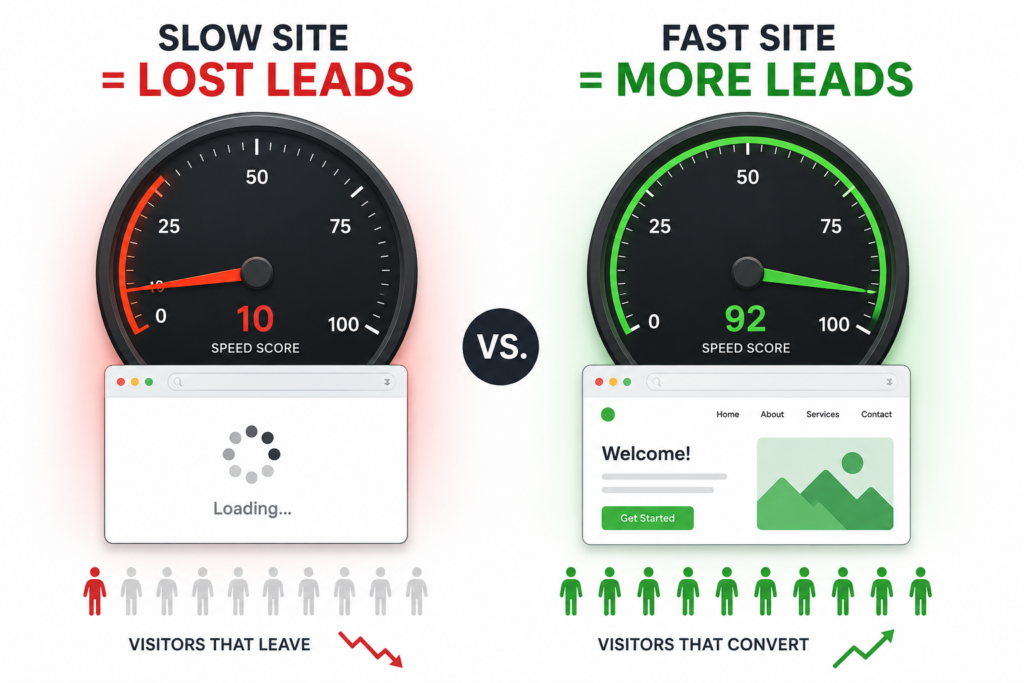
Common causes include:
- oversized images
- poor hosting
- too many plugins
- unoptimized code
Fast websites create smoother user experiences.
Lack of Trust Signal
Trust is one of the biggest conversion factors online.
Visitors need reassurance before they contact you.
Without trust elements, people hesitate.
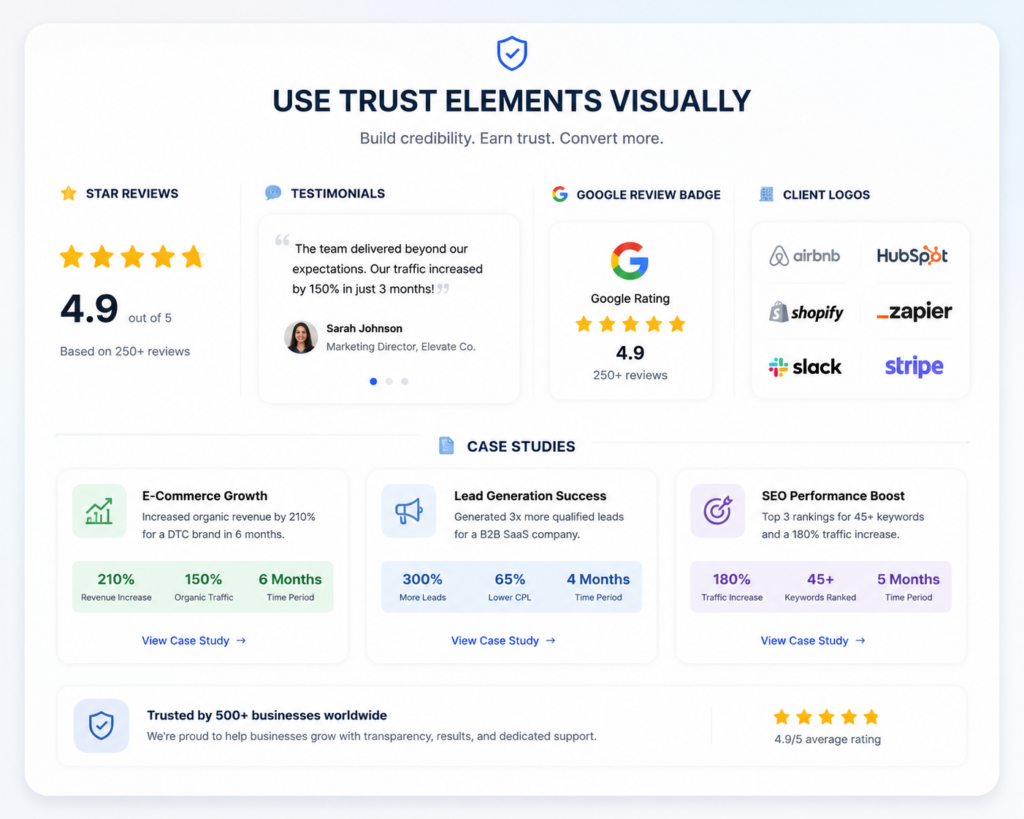
Important trust signals include:
- testimonials
- client reviews
- case studies
- certifications
- guarantees
- recognizable clients
- before-and-after examples
Why More Traffic Won’t Fix the Problem
This is where many businesses waste money.
They think: “If we just get more traffic, we’ll get more leads.”
But traffic amplifies existing problems.
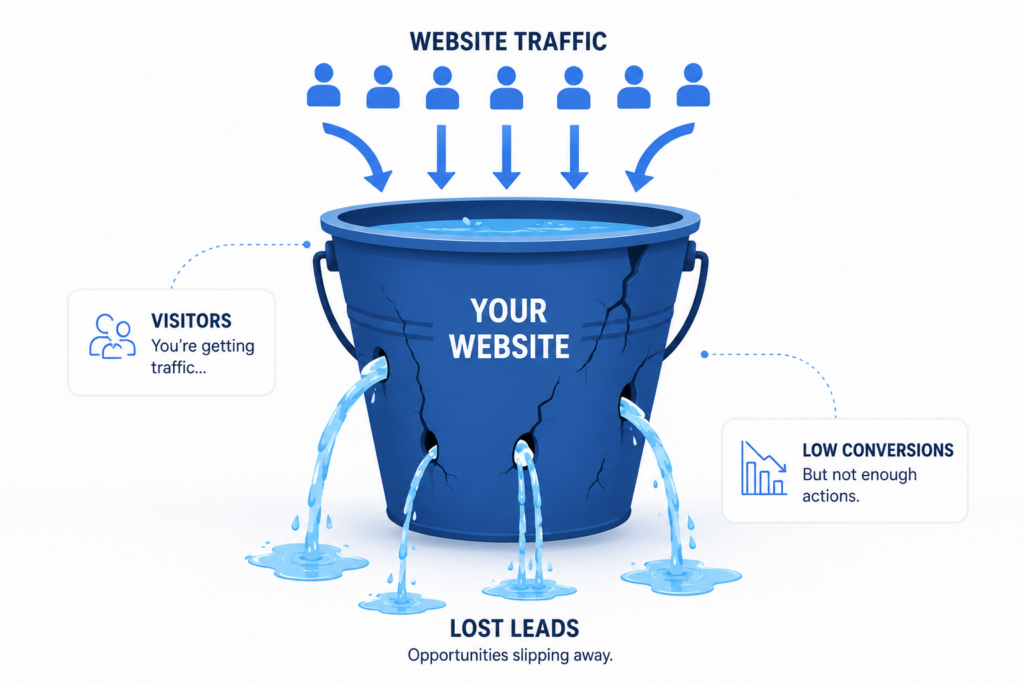
If your website converts poorly now, more traffic simply means more lost opportunities.
Imagine pouring water into a leaking bucket.
That is what paid ads or SEO traffic look like when your website is not optimized for conversion.
Before scaling traffic, businesses should first improve:
- messaging
- trust
- user experience
- calls-to-action
- conversion structure
How High-Converting Websites Actually Work
High-converting websites are intentional
Every section has a purpose.
They guide users through a psychological process:
- attention
- trust
- clarity
- action
Here’s what they do differently.
Clear Positioning
Great websites immediately communicate:
- what they do
- who they help
- why they matter
Visitors should understand your value within seconds.
❌ Weak:
“Innovative Digital Solutions”
✅ Better:
“We help local service businesses generate more leads through SEO and conversion-focused websites.”
Specificity improves conversions.
Conversion-Focused Structure
Most websites focus too much on aesthetics.
Design matters—but structure matters more.
A high-converting homepage typically includes:
- strong headline
- problem-focused messaging
- benefits
- trust elements
- simple CTA
- proof/results
Every section should move users toward action.
Trust-First Design
Good design is not just visual.
It builds confidence.
Trust-focused websites use:
- clean layouts
- whitespace
- clear typography
- professional visuals
- social proof
Cluttered websites create friction.
Simple websites often convert better.
Simple User Journey
The more complicated the experience, the lower the conversion rate.
Users should easily understand:
- where to click
- what to do
- how to contact you
Reduce unnecessary distractions.
One clear path converts best.
Simple Fixes That Improve Conversion Rates
You do not always need a full redesign.
Sometimes small changes create large improvements.
Start with these:
Improve Your Headline
Your headline is the first thing visitors read.
- outcomes
- clarity
- specificity
❌ Weak:
“Welcome to Our Website”
✅ Better:
“Generate More Qualified Leads With a Conversion-Focused Website”
Strengthen Your CTA
Use action-driven CTAs throughout the website.
Examples:
- Get Your Free Audit
- Book a Strategy Call
- Request a Custom Plan
Make buttons visually obvious.
Add More Trust Elements
Include:
- testimonials
- reviews
- client logos
- guarantees
- portfolio examples
Trust reduces hesitation.
Simplify Navigation
Too many options overwhelm visitors.
Keep navigation clean and focused.
Optimize for Mobile
Test your website on:
- phones
- tablets
- multiple browsers
Most visitors will experience your business on mobile first.
What Most Businesses Get Wrong About Website Design
Many businesses focus too much on:
- animations
- fancy visuals
- trendy design
while ignoring:
- clarity
- conversion
- trust
- usability
A beautiful website that does not generate leads is not effective.
The best websites balance:
- design
- strategy
- psychology
- SEO
- conversion optimization
together.
Get a Free Website Growth Audit
If your website gets traffic but fails to generate enough qualified leads, the issue may not be traffic volume.
It may be:
- unclear messaging
- weak conversion structure
- poor SEO
- lack of trust
- or user experience problems
We’ll review:
- your website
- conversion opportunities
- SEO visibility
- messaging
- CTA strategy
- and lead funnel
We help businesses build conversion-focused websites designed to attract and convert qualified leads.
Website Conversion FAQs
Why is my website getting traffic but no leads?
A website may get traffic but no leads because of weak messaging, poor calls-to-action, slow loading speed, lack of trust signals, or poor user experience.
What makes a website convert better?
High-converting websites use clear messaging, strong CTAs, trust signals, mobile optimization, and simple user journeys to guide visitors toward action.